Modern pacemakers feature lithium batteries lasting between 8 to 14 years depending on device usage and programmed settings.
Invasive CARDIOLOGY
Pacemaker & ICD Implantation
Implanted devices that help manage slow or irregular heartbeats.
Book a consultation About this treatment ↓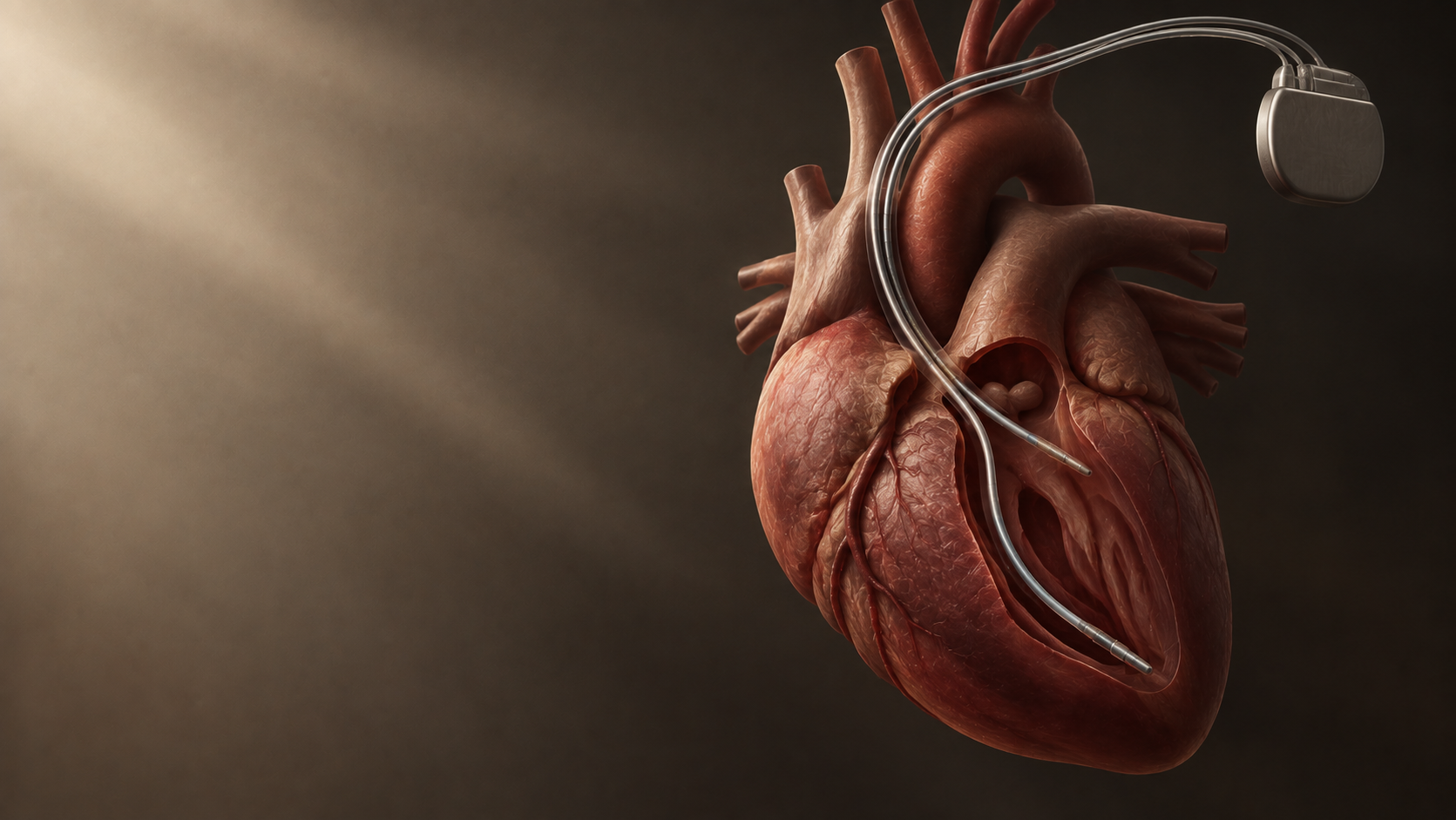
- The focus
- Heart rhythm
- The approach
- Implanted rhythm device
- Your next step
- Personal assessment
ABOUT THIS TREATMENT
What you need to know.
Implantation of single, dual, or leadless pacemakers and implantable cardioverter-defibrillators (ICD) to correct dangerously slow or erratic heartbeats.
01Understanding the treatment
Cardiac Pacemakers and ICDs are miniature electronic devices implanted just beneath the collarbone to monitor and regulate heart rhythm. For patients with sick sinus syndrome, complete heart block, or dangerous ventricular arrhythmias, Dr. Sandhu implants precision pacing devices that prevent faintness, heart failure, and sudden cardiac death.
02Who may benefit?
- Patients with abnormally slow heart rate (bradycardia < 40 bpm)
- Individuals experiencing unexplained blackouts or fainting (syncope)
- Patients diagnosed with complete heart block or sinus node dysfunction
- Heart failure patients at risk of sudden cardiac arrest (requiring ICD)
03What happens during treatment?
Painless procedure under local anesthesia. Micro-leads are guided through a shoulder vein into the heart chambers and connected to a compact pulse generator housed under the skin.
04Recovery & follow-up
Overnight observation in hospital. Resume routine light activities in 3-5 days. Arm movement restricted for 2 weeks to allow lead fixation.
05Benefits of this approach
- Prevents life-threatening heart rate drops and sudden syncopal episodes
- Restores natural energy levels and stamina
- Advanced remote monitoring features for doctor peace of mind
A LITTLE MORE CLARITYYour questions,