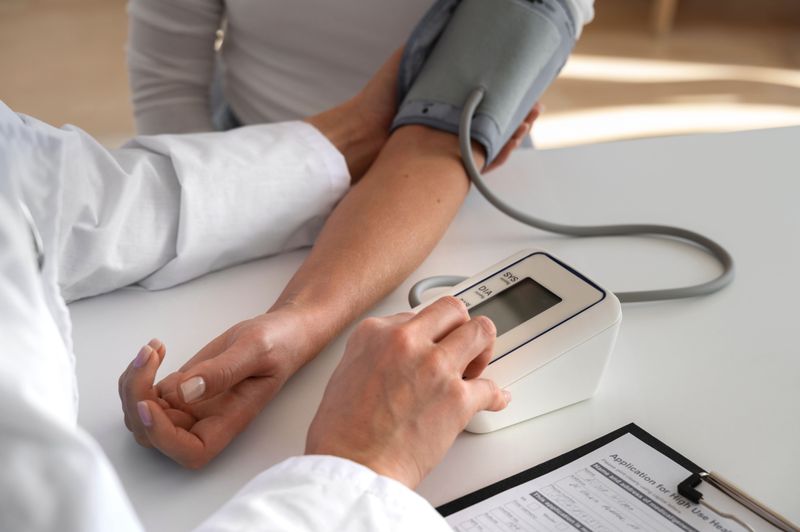
The heart's rhythm starts in a small cluster of cells called the sinus node, in the upper right chamber. The signal then has to travel down a pathway to the lower chambers so they beat in order. If the sinus node falters, or that pathway blocks, the heart can beat too slowly, pause, or swing between slow and fast. A pacemaker is a small battery-powered device that watches the rhythm and delivers a tiny impulse only when a beat does not arrive in time. Most are demand devices: they stay quiet when the heart is already going fast enough.
Symptoms that should be checked
- Fainting, or a near-faint with sudden weakness or a grey-out of vision
- New dizziness or light-headedness, especially if it comes on without warning
- Unusual fatigue or breathlessness on effort that tracks with a slow pulse
- A pulse that is often very slow, or pauses noticed on a check or a home monitor
- Falls or new confusion in an older adult, which are sometimes the only clue
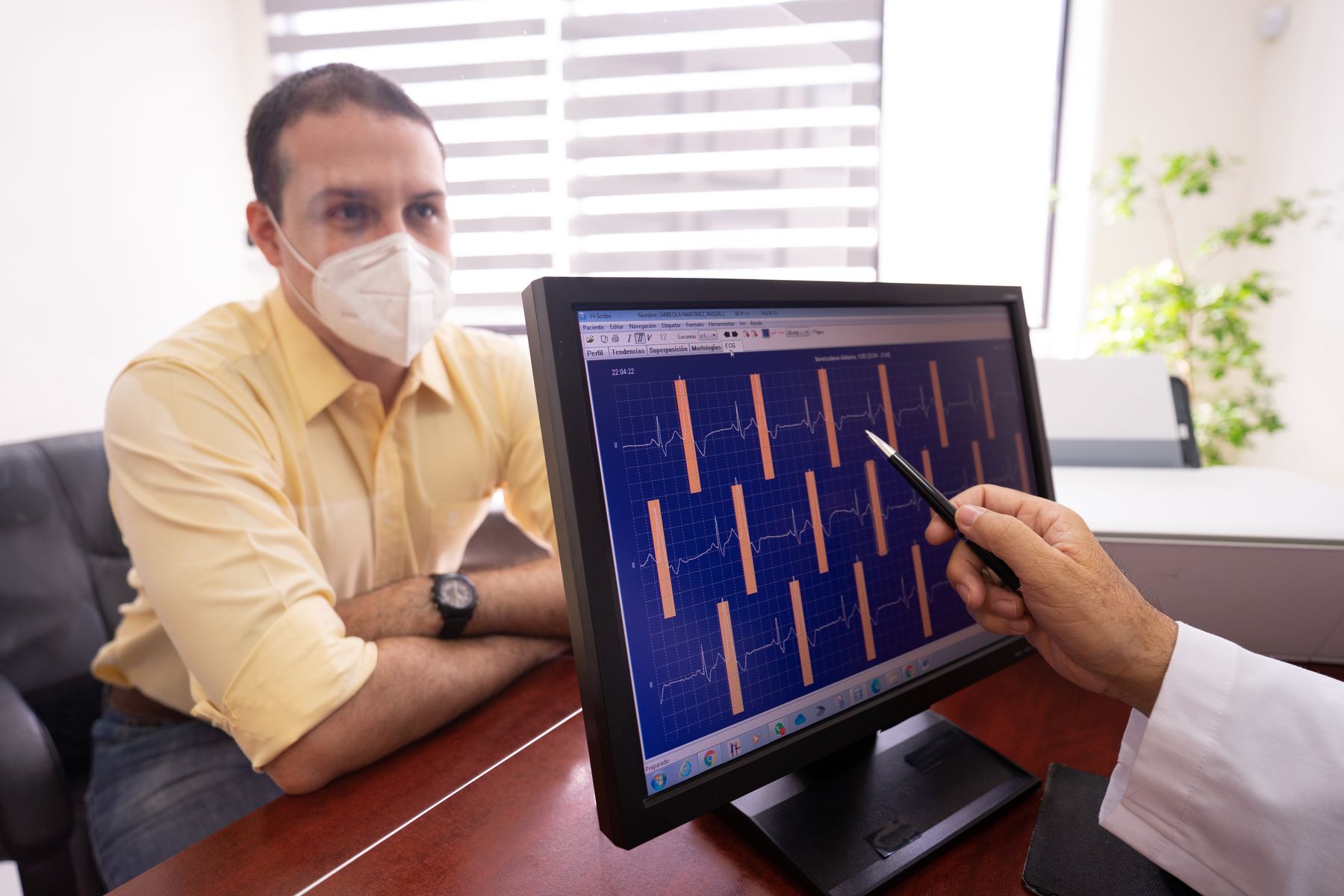
A low number on a home monitor is not, by itself, a reason for a pacemaker. Fit people and people on certain medicines can have a slow resting rate and feel well. The decision depends on symptoms, the ECG, and whether the electrical pathway is reliable. Some high-grade blocks are treated even when symptoms are mild, because the next beat cannot be counted on. That is an ECG diagnosis. It cannot be made from a pulse oximeter or a watch.
A pacemaker, an ICD, and CRT do different jobs
A pacemaker supports a heart that is beating too slowly. An implantable cardioverter-defibrillator, or ICD, is for people at meaningful risk of a dangerous fast rhythm from the lower chambers, such as ventricular tachycardia or ventricular fibrillation. Those rhythms can cause sudden cardiac arrest. Most ICDs can also pace a slow beat. When the rhythm is dangerously fast, the device can deliver a shock to restore a normal heartbeat. An ICD may be considered after a cardiac arrest that was not due to a correctable cause, and in some people with a weak heart or an inherited rhythm condition. It is not a treatment for ordinary palpitations.
A third device, cardiac resynchronisation therapy, is a pacemaker used in selected heart failure, when the lower chambers do not beat together. It is chosen to help the heart pump, not simply to treat a slow pulse.
A pacemaker keeps the rhythm from falling too low. An ICD is there for a rhythm that is dangerously fast. They answer different problems.
What implantation usually involves
A traditional pacemaker or ICD sits under the skin, often just below the collarbone, and is connected to the heart by thin leads passed through a vein. It is not open-heart surgery. The procedure is commonly done with local anaesthetic and sedation. Some newer pacemakers are leadless and sit inside the heart, delivered through a vein. They suit only selected rhythm problems. The team will say which approach fits the tracing and the anatomy, and which does not.
Questions to ask before the procedure
- Which device is being recommended, and which rhythm problem is it treating?
- Will there be leads under the collarbone, or is a leadless pacemaker being considered?
- Which medicines should I continue, and which should I discuss before the day?
- How long should I limit lifting and raising the arm on the implant side?
- When will the device be checked, and which symptoms should make me call?
Recovery and living with a device
Many people stay overnight. Some planned procedures allow earlier discharge. Heavy lifting and raising the arm on the implant side are usually limited for a time so a lead can settle. Follow the instructions you are given. They differ with the device and the procedure.
The battery is sealed inside the generator and is checked at follow-up, in clinic or sometimes from home. When it runs low, the generator is replaced in a smaller procedure. The leads are often left in place. Many pacemakers work for years before a change is needed. Do not wait to feel the battery fail. Keep the check appointments, and carry the device identification card.
Tell every clinician, dentist, and imaging department that you have a device before a scan or a procedure. Some newer pacemakers and ICDs can be scanned in an MRI under specific conditions. Others cannot. Assume nothing until the device has been identified. Keep a mobile phone in a pocket on the opposite side of the generator, not directly over it, and ask which tools or medical equipment to avoid. Strong magnets can interfere if they stay close to the device.
When it is an emergency
If someone collapses and is not responding, call the emergency services and start CPR if you know how. Chest pain, severe breathlessness, or a blackout that is happening now also needs emergency care. Do not drive. A single brief dizzy spell in someone with a known slow pulse should still be reported promptly. It is not the same as a collapse.

Your questions, answered
No. Many slow rates are harmless, related to fitness or medicine, or reversible. Pacing is considered when symptoms and the electrical findings show that the heart cannot keep a safe rate on its own.