
Most people know that smoking injures the lungs. Fewer are told, in any detail, what it does to the arteries and the heart muscle that has to work against them. Smoking is linked to coronary heart disease, stroke, and disease of arteries elsewhere in the body. The American Heart Association notes that almost one third of deaths from coronary heart disease are due to smoking and secondhand smoke, and that, on average, people who smoke die more than ten years earlier than people who do not. That ten-year figure is a population average. It is not a forecast for one person. It is a reason to treat tobacco as a cardiac problem, including in someone whose breathing still feels ordinary.
What the smoke does in the circulation
Two parts of the smoke carry most of the cardiovascular harm, and they act on different clocks. Carbon monoxide, once it is inhaled, binds to the red cells and reduces the oxygen they can carry. The same exposure increases the cholesterol deposited in the inner lining of arteries. Over years that lining hardens. The heart is then asked to push blood through narrower pipes while each pulse delivers less oxygen than it should. Nicotine works faster. It raises heart rate and blood pressure, increases the flow of blood the heart must supply, and narrows arteries. It can remain in the body for six to eight hours, depending on how often a person smokes, which is why a morning cigarette is not a fresh start. The pulse has often not returned to its unstimulated level from the evening before.
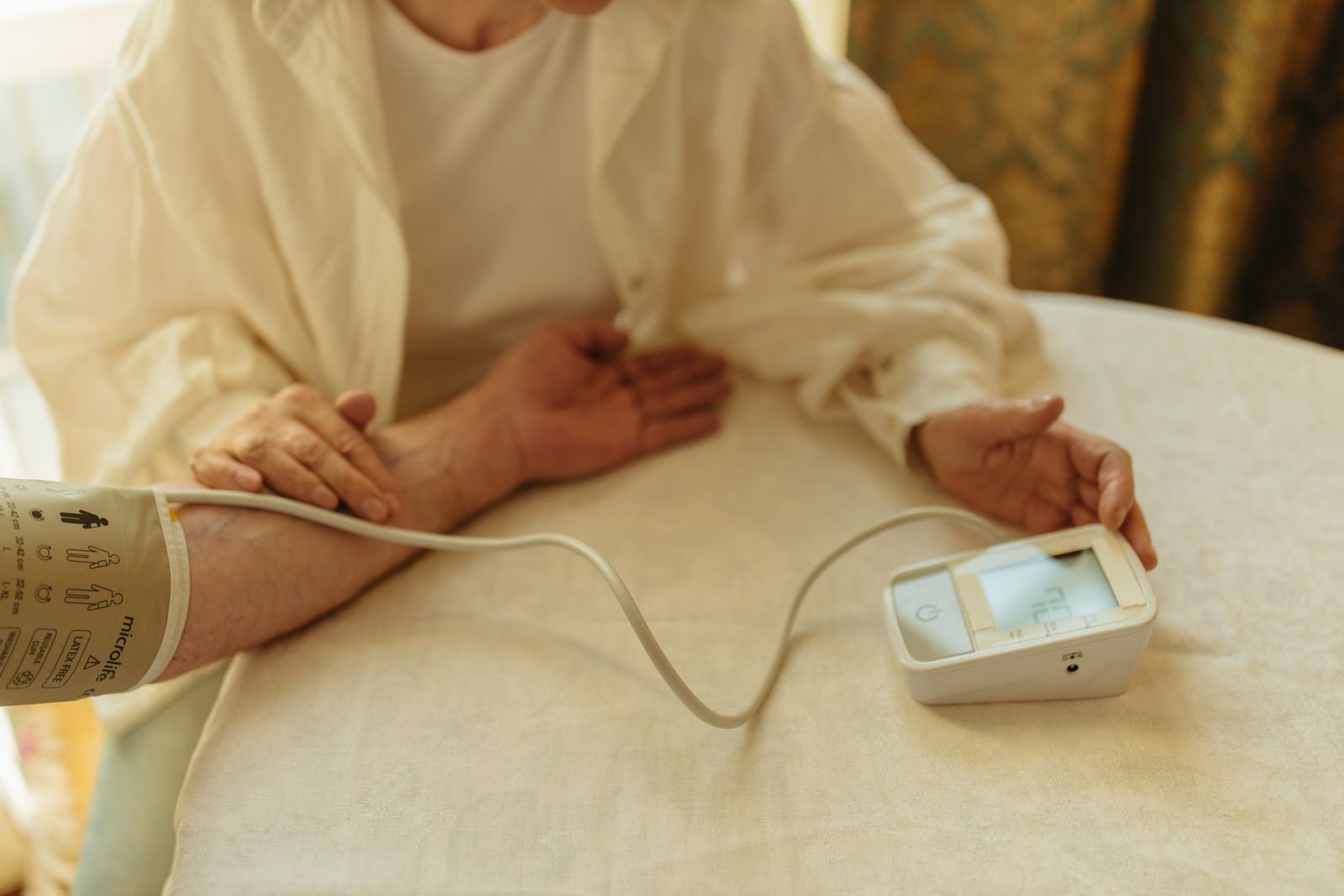
This is why a heart attack can be the first symptom, with no long story of a chronic cough. The artery disease can be silent in the same way high blood pressure and high LDL are silent. A normal exercise tolerance last year does not measure how much plaque has accumulated, and a chest X-ray does not measure it either. The relevant tests are the ones already used for heart risk: blood pressure, a cholesterol profile, and, when symptoms appear, an assessment of the heart arteries.
Smoke in the room is an exposure
Secondhand smoke is not a small courtesy issue. People who breathe it at home or at work have about a 25 to 30 percent higher risk of developing heart disease. That added risk is greater still when they already have high blood pressure or high cholesterol, because the smoke is landing on arteries that are already under strain. Children in a home where people smoke have more respiratory infections than children in a home where nobody does. A car with the window cracked is still an exposure. So is a balcony door left open into a room where other people sit. The person who does not smoke does not get to opt out of the nicotine and the carbon monoxide if they are breathing the air.
The pulse and the blood pressure change within minutes. The fall in heart-attack risk takes years, and it still counts.
Stopping still helps after a stent or a heart attack
People who already have heart disease sometimes decide the damage is finished, so another year of smoking cannot matter much. The arteries do not work that way. As soon as you stop, circulation increases, blood pressure and heart rate move back from the nicotine spike, and the carbon monoxide and oxygen in the blood soon return toward normal. People who quit generally live longer than people who continue to smoke. Quitting is part of the treatment after a heart attack or a stent, in the same category as the antiplatelet tablets and the statin. A cardiac rehabilitation program often includes specific help with stopping, because willpower in the week after discharge is a poor match for a habit tied to tea, phone calls, and the walk home.
What the timeline actually shows
The American Heart Association, citing the U.S. Surgeon General, describes recovery in stages. These are averages for people who stop completely. They are not a guarantee for one person. Cutting down, or saving cigarettes for the evening, does not put you on this timeline. The early changes are the nicotine and the carbon monoxide leaving. The later changes are the slow fall in the chance of a heart attack or a stroke.
- Within about 20 minutes, blood pressure and heart rate drop from the spike caused by nicotine. This is the stimulant wearing off, not the arteries healing.
- After several days, carbon monoxide in the blood returns to normal, so the red cells can carry oxygen again.
- After about two weeks, circulation and lung function begin to improve. Walking may feel less tight, though it often does not feel easy yet.
- From 1 to 12 months, breathing gets clearer, with less coughing and less shortness of breath. Taste and smell usually recover earlier, within days.
- After 3 to 6 years, the risk of coronary heart disease is about half of what it was while you smoked.
- After 5 to 10 years, the risk of stroke decreases. The risk of cancers of the mouth, throat, and voice box falls over a similar span.
- After about 15 years, the risk of coronary heart disease is close to that of a person who never smoked.
Read the middle of that list carefully. A week without a cigarette is a real medical change, and it is not yet the change in heart-attack risk. People abandon the attempt because the first fortnight feels unpleasant and the benefit they were promised is described in years. Both things are true at once. The unpleasant part is withdrawal. The years are how long the plaque risk takes to recede.
Vapes, heated tobacco, and pouches
A vape, a heated stick, or a nicotine pouch is often taken up as a softer version of the same habit. Nicotine from these products is still addictive. It can still raise heart rate and blood pressure, and some newer devices deliver more nicotine than a conventional cigarette. The long-term effect on the heart is still being studied, which is a reason for caution, not a reason to treat the unknown as safety. Switching is not the same as stopping. Using a vape between cigarettes, sometimes called dual use, keeps the carbon monoxide and adds another nicotine source. There is no amount of smoking that the American Heart Association describes as safe for the heart, and a few cigarettes a day still deliver both nicotine and carbon monoxide to you and to anyone in the room.
How a stop is usually planned
People who quit for good tend to prepare for two moments: the last cigarette, and the urges that follow it. The American Heart Association suggests choosing a quit day within the next seven days, on a day that is not already the most stressful of the week, and telling someone who will notice if you disappear into the habit again. Until that day, some people stop abruptly. Others reduce the number of cigarettes over two or three days at a time, or take fewer puffs from each one, and then stop completely on the quit day. All three methods end in a full stop. A smaller daily number, kept indefinitely, is not one of the methods.
The day before, cigarettes, lighters, and ashtrays come out of the house and the car. Food that can stand in for the hand-to-mouth habit helps: fruit, a handful of nuts, or sugar-free gum. The urge itself is often brief. When it arrives, waiting ten to fifteen minutes, drinking water, and doing something with the hands is the advice the American Heart Association gives, because many cravings pass in that window. They should become less frequent day by day. Marking each day without a cigarette makes the stretch visible. A slip is a reason to set the next day as a new start and to tell the clinician, not proof that the attempt has failed.
Medicines, withdrawal, and what is an emergency
Most people need more than a decision. Nicotine replacement, as gum, a lozenge, a patch, a spray, or an inhaler, can take the edge off the physical craving. A typical course is about two to three months, and the product and the strength are chosen with a clinician, even for the ones sold without a prescription. Do not use a replacement and keep smoking or vaping. The American Heart Association warns that using both together can be dangerous. Two non-nicotine medicines, varenicline and bupropion, can also be considered. They work best alongside a plan for the habit, not as a tablet taken while everything else stays the same. If mood or behavior changes in a serious way on either of those medicines, or if there are thoughts of harming yourself or someone else, contact the clinician at once. A family member who notices that change should say so.
Withdrawal is expected, and it is not a heart attack. Restlessness, irritability, trouble sleeping, hunger, and a strong urge in the first days are the usual pattern. Taste and smell often improve within days, and breathing starts to ease. Chest pressure, sudden breathlessness, a cold sweat, fainting, or sudden weakness and trouble speaking are not withdrawal. Those are a heart or stroke emergency, whatever day of the quit you are on. Call the local emergency service. Do not wait to see if the feeling is only the nicotine leaving.

Your questions, answered
No. Blood pressure and heart rate begin to settle within minutes of the last cigarette, even after many years, and carbon monoxide in the blood returns toward normal over the following days. The drop in the chance of a heart attack takes years. It still happens, and people who quit generally live longer than people who continue.